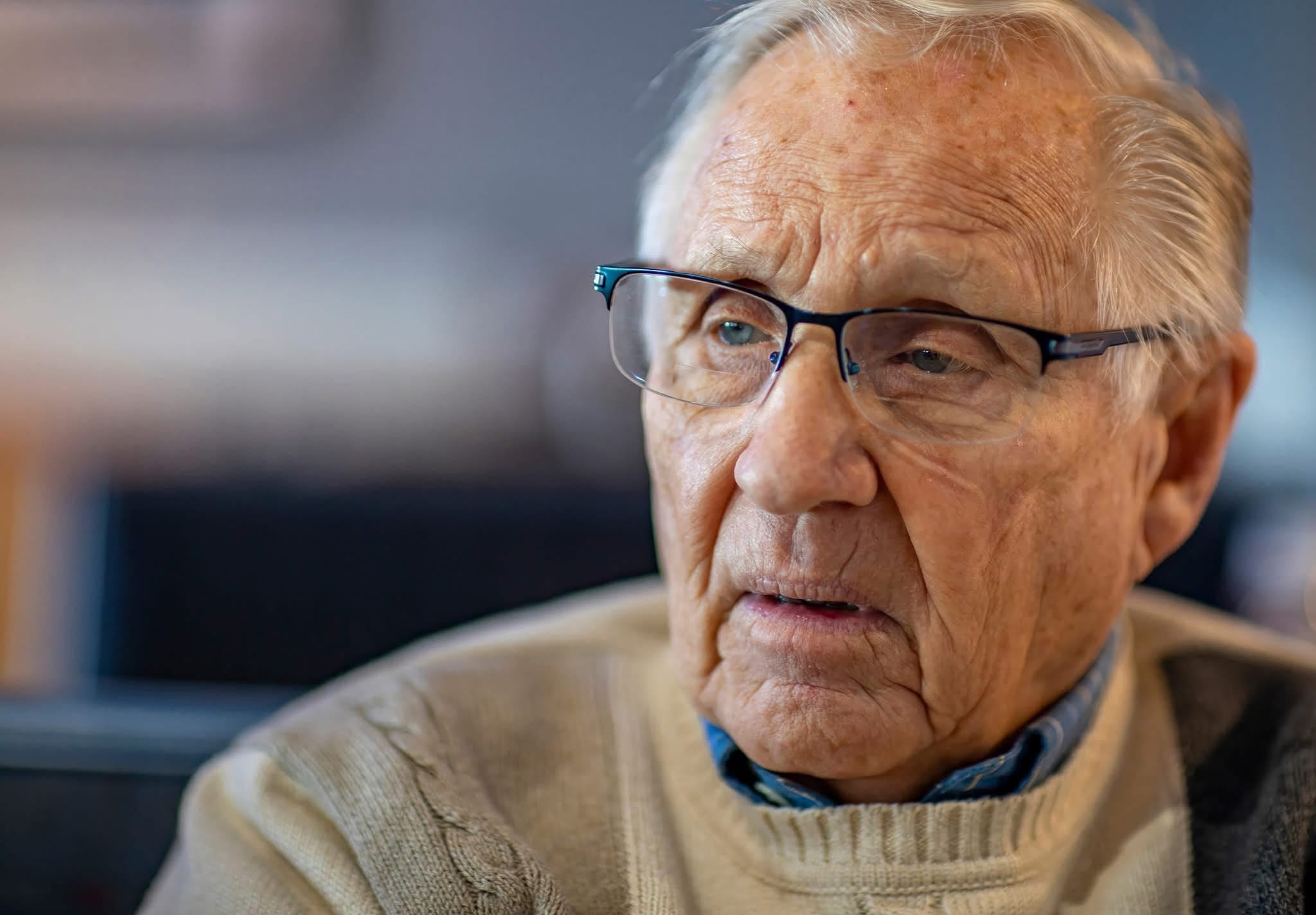
Below, an earlier letter written by Arne Carlson was reported. Crabgrass had heard a more current Carlson item is online, apparently a LTE to Strib. Here, it is reportred.
Strib has a paywall but an individual posted two places, here and here, and the substack item is sourced by Crabgrass. Both items appear to be openly public access.
Just Ask Yourself.....
Former Minnesota Governor Arne Carlson sent this letter to the Minnesota Star-Tribune earlier this morning over its coverage of Governor Tim Walz's executive order on the Boundary Waters Wilderness.
Thank you for a well written and detailed article on the Walz directive to temporarily protect the BWCA. As you know, this controversy has been a continuing story since October, 2013 when State Auditor, Rebecca Otto, forcefully opposed opening the state to copper-nickel mining and was the lone vote in the state’s Executive Council against it. From that point on , she was pilloried and the office stripped of many of its powers. And those acts of retribution were led by her own party.
In July of 2016, former Vice President Walter Mondale wrote a commentary in MinnPost warning that the BWCA could not be saved unless we were willing to protect the entire Lake Superior watershed. In another commentary published in the Minneapolis Star Tribune , he wrote that “ sulfide ore mining has never-never been undertaken without serious environmental consequences. “
Additionally, the Minnesota medical community , including members from the Mayo Clinic and the University of Minnesota, have been publicly petitioning the state for well over a decade to include a Health Impact Assessment ( HIA ) study as a requirement for a mining permit. However, the Dayton and Walz administrations chose to do nothing, absolutely nothing except make false promises. Just read Walker Orenstein’s article on this in MinnPost (August, 2019 ).
This policy of stonewalling the public was, in fact, the policy of our state government and fully embraced by both parties and all too accepted by the media. Consider this: the Governor and Legislature have refused for well over a decade to hold a single public hearing on ANY legislation that would update our antiquated mining laws in order to protect our state’s drinking water.
And , for the past eight years, my colleagues and I have been writing commentaries published in a variety of newspapers around the state with a simple message - large campaign donors are driving our policy decisions. Interestingly, not a single elected official has publicly protested our declarations.
Just ask yourself:
“ Why is the State of Minnesota processing a mining permit for one of the world’s most corrupt companies, Glencore? “
This is not a trivial or minor concern. Rather, take notice that the discharges from Glencore’s proposed New Range Copper Nickel Mine will flow south of the Laurentian Divide into Lake Superior and the Great Lakes thereby contaminating the drinking water of some 30 to 40 million people with arsenic and mercury. This will be cataclysmic.
Wikipedia has some 27 paragraphs on Glencore’s illegalities and yet there has not been a single legislative or executive public hearing on this. Not one. How is it that an international mining conglomerate that pled guilty to bribery of public officials and market manipulation in a United States Federal District Court and agreed to a fine of $1.1 billion can be so welcome in Minnesota?
What is even more perplexing is that candidates for our state’s leadership positions can plead for more time to think about this. What precisely do they need to think about?
No, the future of our drinking water must be a very public issue and fully aired throughout our state. Certainly, all sides should be able to at least agree on requiring an independent Health Impact Assessment on all endeavors that threaten our dwindling supply of healthy drinking water.
Subscribe to Duke Skorich
Launched 8 months ago
Former television news anchor/news director, national news editor, talk radio show host, owner of Zenith Research Group, political consultant and scratch golfer.
Crabgrass opines: There is no threat of copper or nickel shortages now or in the future if the proposed sulfide mining in Minnesota is permantly barred. Chile has the world's largest reserves, and has massive operating mining ventures within its borders.
So, why Minnesota? Nobocy has offered any good statement of why here, other than ore was found and somebody wants profit. It is that simple. If water considerations exist, Carlson suggests that's enough to put the kibosh to any plan but leaving the undisturbed ore where nature placed it.
If that does not make sense to you, sorry, but at Crabgrass it's all the sense that's needed.
In closing, what this letter shows most is Carlson's ongoing concern that we could do wrong.
He is correct in that worry. His earlier correspondence from after leaving office, below, shows the ongoing nature of Carlson's concern. As in: Why risk it?
UPDATE: What is lost in all this one expert says X, another says Y, a third weighs X and Y; is that risk aversion is subjective, not objective, and in an instance of long term risk into an uncertain future, strict risk aversion makes sense. If you don't know, and it's guessing at probabilities and event severity, the safest thing is - other places might involve less risk, and the current opinionating has had no comparative location-objective discussion whatsoever. A better phrasing of the question is not here, yes or no, but here vs somewhere else, with worldwide reserves in mind, and thorough exploration being helpful.
Bottom line: It does not have to be, there are risks that are guesswork, so bag it and mine sulfide ores elsewhere while continuing to mine as safely as feasible Minnesota's vast remaining taconite, which mining supports the Iron Range now, and onward.
Why gamble it, just so multinational giant mining firms can extract a local profit? Fuck 'em.